 日本語
日本語 English
 नेपाली
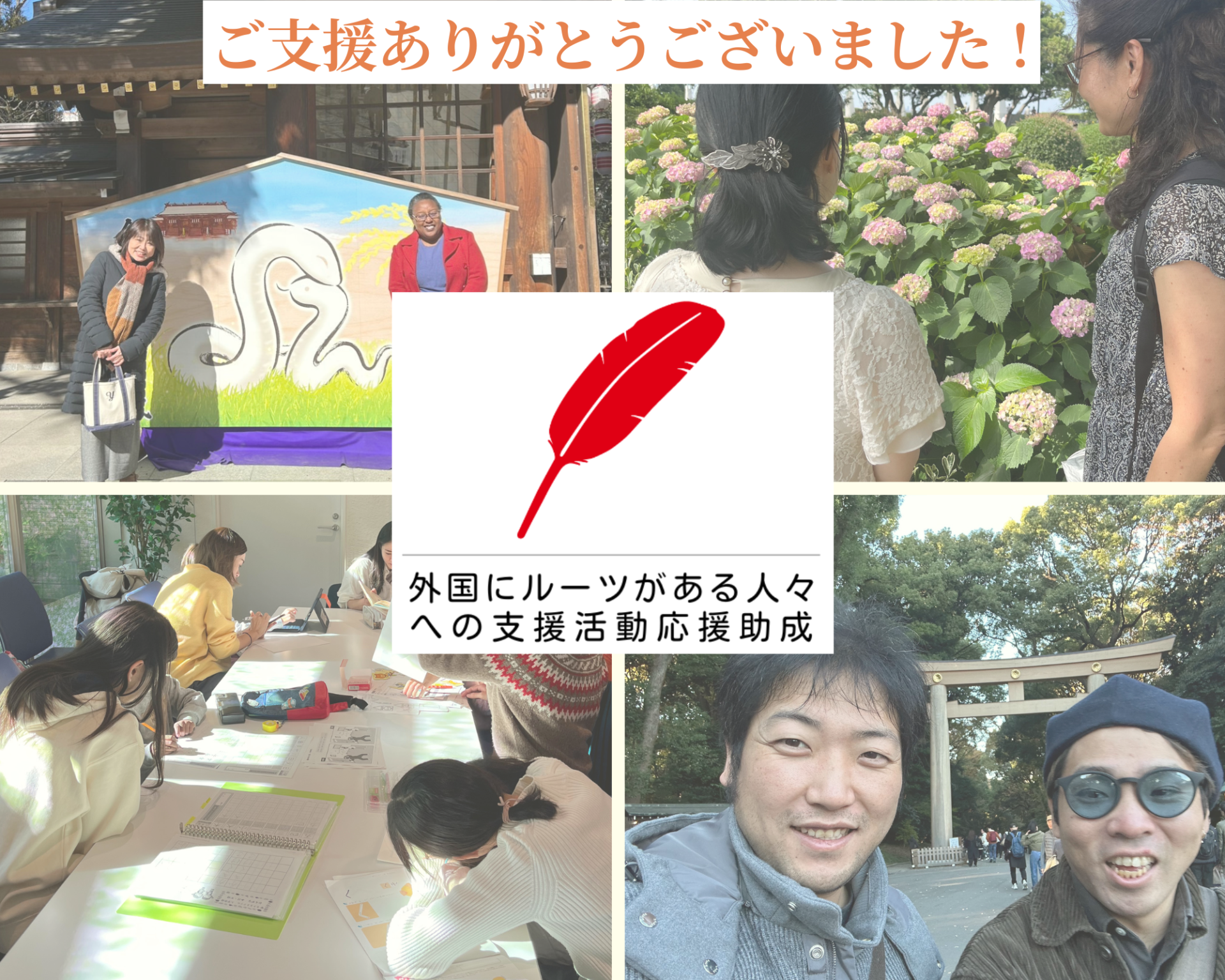
Our organization received the Akai Hane Post-Corona Society Welfare Activity Support Campaign "Support Grant for Activities Assisting People with Foreign Roots, 5th Round," enabling us to carry out activities such as the Otonari-san Family Friend Program (OFP), Spot Otonari-san (SOFP), and Hanamaru Class, where local residents take the lead in supporting foreign residents. (Grant period: October 2024 to May 2025)
Overview of Activities
Otonari-san Family Friend Program (OFP)
At OFP, Japanese volunteers are paired one-on-one with foreign residents living in the same community to provide support and foster交流 over a six-month period. As of 2024, more than 600 volunteers and participants from over 40 countries have taken part in the Tokyo metropolitan area. The program is highly regarded for its thorough interviews, ongoing support, and expert team involvement, creating a safe and welcoming environment for participants. Many join through word-of-mouth recommendations from friends and acquaintances. Additionally, to clarify the benefits of participating in OFP, we have partnered with university researchers to begin collecting survey data measuring the impact on foreign participants.
Spot Otonari-san (SOFP)
At SOFP, we have been conducting activities where volunteers provide one-time support to foreigners living in Japan in essential areas such as welfare, medical care, education, and daily necessities. We worked on creating the system and developing various tools in preparation for the launch, which began operations in February 2025. Currently, there are over 50 registered volunteers. Requests so far have included accompanying consultations for children with developmental disabilities, prenatal checkups, and infant health examinations.
Learning Support for Children with International Roots: "Hanamaru Class"
We provided regular learning support for children with foreign parents who are about to enter elementary school or in the lower grades, focusing on basic Japanese practice such as hiragana and katakana, as well as homework assistance. At the same time, during the waiting time for parents accompanying their children, volunteers offered Japanese conversation practice to those parents who wished to participate. The activities were carried out by registered OFP volunteers, and most children and parents who joined once continued to participate regularly, resulting in a cumulative increase in the number of participants each session.
Achievements
In addition to our ongoing activities, we have increased opportunities for more people to learn about our work through the creation and distribution of annual report booklets, building the SOFP website, and public relations activities via social media. By expanding the scale of our activities, we have been able to foster genuine, face-to-face relationships between Japanese and foreign residents. Through participation in OFP and SOFP, foreign residents gain access to approachable and trustworthy Japanese advisors, enabling them to resolve everyday challenges, improve their Japanese language skills, understand common Japanese customs, and learn local living rules. This support helps foreigners acquire the knowledge, skills, and wisdom needed to smoothly integrate into Japanese society, enhancing their ability to live independently in Japan without isolation.
Challenges and Future Initiatives
Last year, the number of foreign arrivals to Japan reached a record high, drawing attention to the increase in international tourists visiting Japan. At the same time, concerns about issues related to overtourism have been rising. Additionally, against the backdrop of a declining birthrate and aging population, dependence on foreign workers across various industries has grown stronger. However, there is also a troubling rise in discriminatory behavior and speech—especially online—that stokes social unrest and worsens public safety. In this context, the OFP and SOFP frameworks, which differ from traditional "international exchange" or "one-sided foreigner support," help Japanese people deepen their understanding of foreign residents, enhance intercultural communication skills and experience, and provide opportunities to better grasp the realities and challenges faced by foreign residents. We believe these efforts contribute to reducing social risks such as prejudice, discrimination, and hate speech.
We will continue to work on the following initiatives to promote genuine relationship-building and mutual understanding between Japanese and foreigners.
- Securing stable funding to sustain activities
- Aiming for greater participation of foreign residents by establishing cooperative frameworks with businesses, government agencies, and local municipalities
- Development of an IT platform aimed at optimal pairing-up of foreign residents' needs and volunteer support
Thank you for your support
To everyone who donated and supported us, thank you once again. Thanks to your support, we have been able to advance our activities. We sincerely express our gratitude. Moving forward, we aim to realize cultural synergy where Japanese and foreign residents respect each other's differences and live as "good neighbors." We appreciate your continued support.