 日本語
日本語 English
 नेपाली

The third report: Many instances of 'foreigners not allowed' are due to income and lifestyle habits, and sometimes preconceived notions.
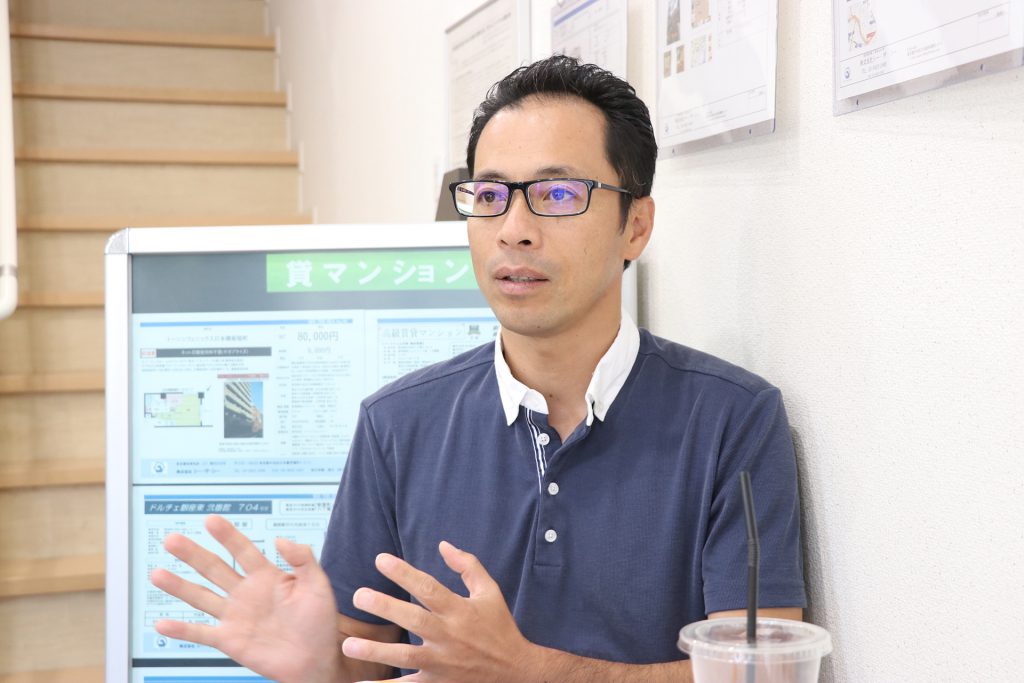
CEO of Caesar Sea Co., Kenji Mikumi
(Continuation of Part 2)
JII: At what point are you told that foreigners are not allowed?
Miumi: It depends on the property, but for cheaper options, you usually find out when you inquire. Real estate agents also want to avoid unnecessary movements, so they generally ask the owner in advance. However, in most cases where foreigners are not allowed, it's often because the individual has had a negative experience in the past.
Actually, this is something that happened with a property we manage. There were two Chinese male students who suddenly disappeared and we lost contact with them. When we finally got in touch, they had already left Japan without paying their rent.
JII: What did you do at that time?
Miumi: There was a one-month security deposit, but that was nowhere near enough, so all the subsequent costs ended up being the owner's responsibility. It was a real letdown.
If you are enrolled in a guarantor company, they will cover the costs, but if you are not, the owner will bear all the expenses. Even though not everyone is in the same situation, when something like this happens, it makes you not want to rent, right?
JII: That must have been tough.
Miumi: Another common issue in management is waste. While waste problems exist among Japanese people, the strict waste separation rules in Japan can be particularly challenging. Those who have received proper education may handle it well, but there are instances where people throw away items like instant noodle cups with leftover soup still inside, or mix bottles and cans together. This becomes a significant issue for management and often causes stress for those in charge, leading them to feel overwhelmed by such behaviors.
JII: Indeed, people who don't follow the rules are troublesome. Is it only those who have had unpleasant experiences, or do rumors also cause people to decide not to continue?
Miumi: Well, there aren't many, but it depends on the person. There are still some old-fashioned people who just don't like it for some reason.
JII: Is there anything that can be done about that?
Miumi: Ideally, it would be great to have an interview. For example, when it comes to challenging properties, like single-family homes for foreign families, owners tend to have their concerns. If the owner is present during the viewing and can meet the prospective tenants, and if they feel comfortable with them, it can lead to a positive outcome. Depending on the property conditions, there are landlords who are more assertive and those who are more flexible.
JII: I see, that’s also business after all. Just based on your own sense, about what percentage of properties are not available to foreigners?
Miumi: It varies greatly depending on the property. For higher-end properties, only those who can afford them tend to show up, so you won't find many people there. For example, those who pay over 100,000 yen in rent usually have a substantial income. On the other hand, there are many people interested in more affordable properties.
In fact, the issue is more around 50,000 to 60,000 yen. For example, if two male international students want to live in a 2DK apartment in places like Okubo or Ikebukuro for 100,000 yen a month, about half of the landlords will say no when asked if it's okay. They worry about how the students will pay since they have no income.
Miumi: For landlords, the most important thing is whether they understand the tenant's income and lifestyle. If that assurance is in place, the goal is to rent, so I think it will generally be fine. For example, if you can provide proof of income, have a visa, and can speak Japanese, there are almost no issues. I had a client before, a Chinese girl who graduated from graduate school in Japan and was going to join McKinsey, and there were no problems at all. In fact, the laws favored the renters.
JII: From my experience searching for properties so far, it feels like the owners have the upper hand, and somehow it doesn’t seem very fair.
Miumi: Since properties are a business, there are situations where the owner can be assertive and others where they cannot, depending on the condition of the property.
JII: But from the renter's perspective, the owner also lives off the rental income, so they must want someone to rent the property. It's something that works because there are mutual benefits. It doesn't really feel like a customer relationship, though.
Miumi: I understand how you feel, but if it's a popular property, it's usually the owner who chooses the tenants, regardless of the country. However, Japanese owners might pay close attention to the details about the renters. They may not be willing to rent without checking things like collateral.
JII: Regarding financial risks, the owner wants some form of guarantee, right?
Miumi: In Japan, there is an old law called the Land and Building Lease Law, which is favorable for tenants. Even if you fail to pay rent, you cannot be evicted immediately. I don't think that would be the case in other countries.
JII: Is it a law that favors the tenants?
Miumi: That's right. For example, even if you don't pay rent for one or two months, you can't just be evicted. To get someone to leave, you have to go through various procedures in court, and it can easily take around six months.
The owner will bear all the costs of the lawsuit, so naturally, they want to have reliable and stable tenants. It's not as simple as saying anyone can stay as long as they pay; if they don't, they can't just be kicked out. Therefore, the owner has to be very cautious.
JII: Oh, I didn't know there was such a background. Please tell me more in detail.
Miumi: Before that law was established, the owners likely held a strong position, which resulted in many disadvantages for tenants. I believe that after the war, laws were created to properly protect the rights of renters.
However, there may be some aspects that go a bit too far. Isn't there a perspective that questions the right of tenants to stay without paying? There seems to be an acceptance of that, which doesn't feel fair. As a complementary measure, the Fixed-Term Lease Law was established.
Miumi: In the case of a fixed-term lease, it is fair for both parties. For example, in a standard contract, if the owner wants the tenant to leave for their own reasons and the tenant refuses, it can lead to significant disputes. And what does the owner do? They might have to help find a new place or even cover moving costs just to get the tenant to leave. This can incur quite a bit of expense. These are rights that protect the tenant. As a result, the owner's right to choose only applies at the beginning, making that initial stage crucial.
JII: I see, when you delve into the legal aspects, it becomes clear that landlords who seem to act arrogantly by conducting various screenings are actually operating based on that premise. I think if this is widely understood by foreign tenants as well, they can better understand the landlord's position.
Miumi: Japan's leasehold and rental laws are designed to be favorable for tenants, which makes landlords understandably nervous when selecting initial occupants. Especially since legal issues vary greatly from country to country, it's important to communicate clearly and ensure understanding.
JII: That really made sense to me. Searching for a property is important for everyone, and even small troubles can cause stress. Thank you very much for sharing so many interesting stories today. When you are abroad, it’s easy to associate unsatisfactory treatment with discrimination. But by sharing mutual common sense about why things are the way they are, there are parts where reconciliation becomes possible. It’s the same when Japanese people go overseas.
JII: It is expected that the number of foreign residents will continue to increase. Do you have any hopes for the future?
When in Rome, do as the Romans do. I want those coming to Japan to understand this. It's essential to grasp the common sense of the society you are in. Having this mindset makes it easier to blend in. As a result, if more people adopt this attitude, it becomes easier for the locals to accept them. That's where it all begins. I believe this applies everywhere in the world.
JII: I have lived in Japan for a long time, and I feel the same way. Thank you very much for your time.
(end)
(Text: Yang Miao, Mariko Uematsu)
Related Articles
- Why is it so difficult for foreigners to find properties?! Part 1: Key Points for Property Search and Finances
- Why is it so difficult for foreigners to find properties?! Part 2: Avoiding Troubles
- Why is it so difficult for foreigners to find properties?! Part 3: Why are they rejected? Income? Lifestyle habits?