 日本語
日本語 English
 नेपाली
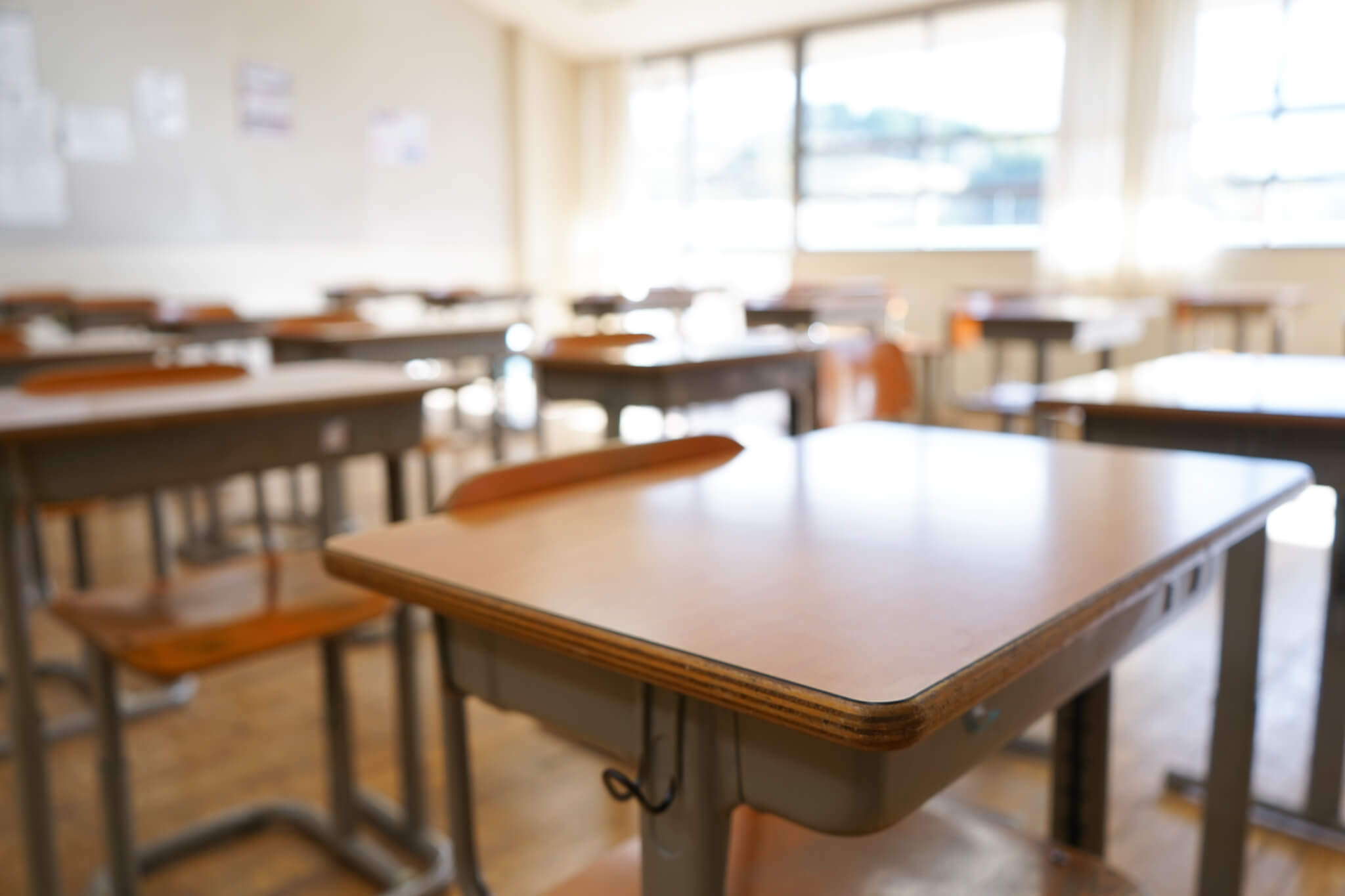

This article is an excerpt and edit of the content from the "When You Feel Anxious About School or Nursery Life: Parental Mindset and Response" lecture and consultation held in 2018.
*Available in English and Chinese versions
Do you know the definition of "school refusal"?
Currently, taking a total of 30 days off in a year, even if it's sporadic, during the compulsory education period in elementary and middle schools is considered "school refusal." If a student averages 2 to 3 days off in a month, they may be suspected of school refusal.
The History of School Refusal
The Ministry of Education began collecting statistics on school refusal and children who do not attend school in 1966. Before that, it was common for children to miss school, and it was not considered a problem.
However, as industries have developed, countries have sought a uniform workforce that can work according to manuals, and they have looked to schools to provide this. There has been a growing expectation for schools to cultivate a workforce that is not only uniform in skills but also in knowledge and behavior.
Until then, children were a convenient source of labor in fields like agriculture, fishing, and mining. So, it was only natural for them to miss school.
In the early days, taking 50 days off in a year was still a concern. It was a time when experts casually said things like, "The parents are raising them poorly" and "That child has a personality that makes it hard for them to come to school." As a result, any absence from school was attributed entirely to family issues.
Since the late 1980s, the number of children who do not go to school has been steadily increasing. At this point, it can no longer be explained by parenting methods.
What has changed here is that school education has become more rigorous.
The number of children has been decreasing, and the content of education has become more rigorous. While the guidance to improve grades is strict, student discipline has also become more stringent, leading to feelings of fear and fatigue among children. This trend began in the late 1980s.
In 1990, the Ministry of Education sought advice from experts, who concluded that when children miss school, it is often due to difficulties within the school environment. Therefore, school refusal and absenteeism can happen to any child, highlighting that these issues are more about the school itself.
Due to strict guidance and intense competition, bullying naturally arises. Additionally, as children spend more time studying—whether to keep up with schoolwork or to prepare for higher education—often attending cram schools and other programs, the number of children who do not attend school has continued to increase.
How the school responded
The total number of children continues to decline. On the other hand, the more measures the Ministry of Education implements, the more the number of children who do not attend school continues to rise.
This is because measures were taken from the perspective of school education, rather than from the viewpoint of the children.
When a child is absent from school, it reflects on the school's ability to guide them, so we want to do everything we can to help the child return. Children are often hurt by bullying, inappropriate guidance from teachers, and the harsh dynamics of senior-junior relationships in clubs. Additionally, in today's world, many parents are relocating for work, leading to an increase in school transfers. Changing schools can make children more vulnerable to becoming targets of bullying.
It is often said that school refusal is a school issue, and as the numbers increase, the quality of education at that school comes into question. As a result, the focus of measures against school refusal has become simply to reduce the number of children who are absent.
The key is to identify and resolve the reasons why students stop attending school, making it easier for others to go, and helping those who are currently absent to return. To get students back to school as quickly as possible, we implemented measures such as home visits, writing letters, and sending friends to pick them up.
Feeling hurt at school, I no longer have a place there. Living in a place where I don't belong truly wounds the heart and erodes my confidence. I have been working tirelessly to ensure that children who have withdrawn to their homes to regroup and figure out their next steps can return to school without missing a single day.
In trying to get children who are hurt and in difficult situations back to school, a situation has arisen where even if they express, "I don't want to go to school," their feelings are not acknowledged, and they are not allowed to take a break.
As a result, the number of children refusing to attend school and those who are chronically absent continues to rise.
Continue


Counselor:
Ryouko Uchida
Since 1973, I have been providing consultation services at several public health centers in Tokyo. Since 1998, I have been running the "Children's Consultation Room: Momo's Room," where I hold group counseling sessions for issues such as school refusal, delinquency, and social withdrawal. I have also served as a part-time lecturer at Rikkyo University and as an advisor for NHK Radio's telephone consultation program, "Children's Heart Consultation." I have given numerous lectures at parenting circles across the country, as well as at meetings for parents considering school refusal and at kindergartens. My published works include 'Counselor Ryoko's Parenting Mysteries,' 'Q&A on Young Children's Lives and Hearts,' and 'Reluctance to Attend School.'