 日本語
日本語 English
 नेपाली
*This article is an edited excerpt from the "Parenting and Discipline for Young Children" seminar and consultation held in 2018.
*Available in English and Chinese versions
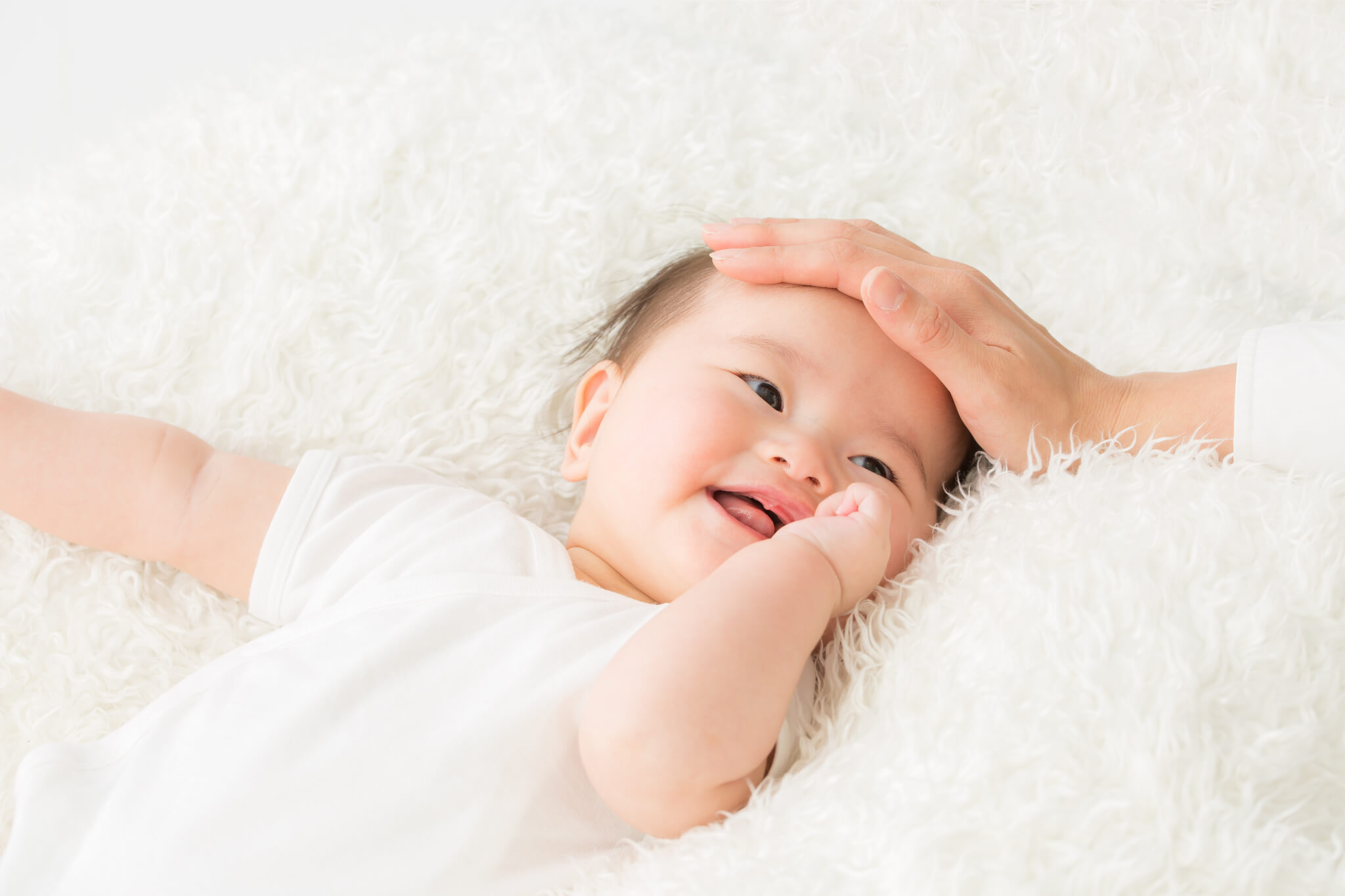
The Path of Baby Development
The path of a child's development has a significant turning point at the age of three.
The reason is that in Japan, children's social lives begin around the age of three, when they start participating in groups and spending a few hours during the day with friends their own age.
The growth from birth to age three is primarily based in the home. So, how do children develop at home during these early years?
Ages 0 to 1 are a time of significant physical growth.
Babies are born with the innate ability to grow and thrive, regardless of the country or ethnicity they belong to.
While differences in language and culture create a diverse adult life, there are many commonalities in children's growth.
The common language of children is "play."
Even if words don't connect, we can communicate through play.
Even if we meet in a new place, we can build relationships through play.
Children have a remarkable ability to adapt.
Human babies are referred to as "physiologically immature" because they cannot walk or feed themselves at birth.
The basic physical development necessary for living in the natural world occurs during the first year of life, and by that time, most children are able to walk. Cautious children may wait to start walking until they feel completely ready, even if their physical abilities are fully developed. In such cases, it can take from one year to a year and a half for them to begin walking.
Another characteristic of children around 1 to 1.5 years old is that they start to speak. Simple words like "Papa," "Mama," "woof woof," and "meow meow" typically emerge during this time.
During the 18-month checkup, you will be asked, "How many words can your child say?"
It's okay if you can speak about three things during that time.
The reason is that sounds like "ah" and "uh" are produced from infancy, but words like "daddy" and "mama" require the coordination of the speech organs, such as the lips, vocal cords, and jaw, to produce. Once this coordination is established and a child can form words correctly, that milestone is typically reached around 18 months. So, to be honest, at around one year old, it's perfectly fine if a child can only say one word.
What was once "ah" becomes "mama," and what was once "wa" turns into "woof woof." This is a remarkable advancement in technology.
In which language should we raise them?
At this time, in families where either the father or mother has not been raised in Japanese culture, many parents find themselves unsure about which language to raise their children in. It is common to receive inquiries at health centers asking, "What language should we raise them in?"
In such cases, what I would like you to consider is the language that the person who interacts most with the child, often the mother, uses when thinking and expressing her feelings and emotions.
When a mother is happy, sad, or frustrated, what language does she speak? What language does she think in when considering complex matters? Sharing these experiences leads to the richest conversations for children, making it an important point to consider when thinking about "what language to raise them in."
Regarding the Japanese language, it is something that you naturally acquire when you enter a communal living situation or watch television and movies during the stages of growth, especially if you live in a Japanese cultural environment.
"Mischief" that begins around the age of 2
By around two and a half years old, children start to speak two-word phrases, such as 'Daddy work.'
You will start to speak simple sentences, becoming more talkative and improving your communication skills. Interacting by talking to others and listening to their stories becomes enjoyable around the age of two.
By the age of one, children can start walking, and by the age of two, their verbal communication becomes more expressive. Once they can walk and talk, children develop a love for mischief.
Children's "mischief" is essentially a mimicry of what adults do.
You will learn daily habits by imitating what your mother does, such as cooking and doing laundry.
The power of a child's growth lies in their ability to imitate.
To put it in formal terms, it's called 'learning,' but fundamentally, it's about imitation.
Playing house and playing with dolls is truly a compilation of imitation.
If you also remember the words at that time, you will learn not only the way your mother and father greet people but also how they communicate. You will absorb vocabulary as well as grammar, and in doing so, you will also learn about daily life habits.
As children imitate everything their parents do, activities that are safe to mimic, such as pretending to cook during playtime, become a form of "play."
However, for example, when you see your dad smoking, you might want to imitate him. This can lead to mischief.
When a father plays with a lighter, it makes the child want to touch it too; this is also a form of mischief.
For children, cooking and smoking are completely the same in terms of imitation. However, they still cannot distinguish between what is acceptable and what is not. This is typical for the age of two.
After the age of 3, the sense of self becomes firmly established.
By the age of 3, children begin to show signs of ego development. As their sense of self becomes firmly established in their mental world, they gradually develop the ability to manage and understand what is acceptable and what is not.
Instead, you become more assertive as you think and make decisions for yourself.
In Japanese, there is a saying, "The soul of a triplet lasts until a hundred," which suggests that children who are over three years old develop a strong sense of self and continue to assert themselves while making their own judgments until they reach the age of one hundred.
First, the body develops, and then language is acquired. As the sense of self grows, individuals begin to navigate their daily lives based on their own existence. Once they reach a stage where they can make sound judgments, it becomes almost acceptable to join a group, live away from their parents, and not constantly look to them for guidance.
As a result, many children begin group activities at the age of three. This is the developmental path for children up to three years old.
Continue
Ryo Uchida (Child Psychology Counselor)
Since 1973, I have been providing consultation services at several public health centers in Tokyo. Since 1998, I have been running the "Children's Consultation Room: Momo's Room," where I hold group counseling sessions for issues such as school refusal, delinquency, and social withdrawal. I have also served as a part-time lecturer at Rikkyo University and as an advisor for NHK Radio's telephone consultation program, "Children's Heart Consultation." I have given numerous lectures at parenting circles across the country, as well as at meetings for parents considering school refusal and at kindergartens. My published works include 'Counselor Ryoko's Parenting Mysteries,' 'Q&A on Young Children's Lives and Hearts,' and 'Reluctance to Attend School.'