 日本語
日本語 English
 नेपाली
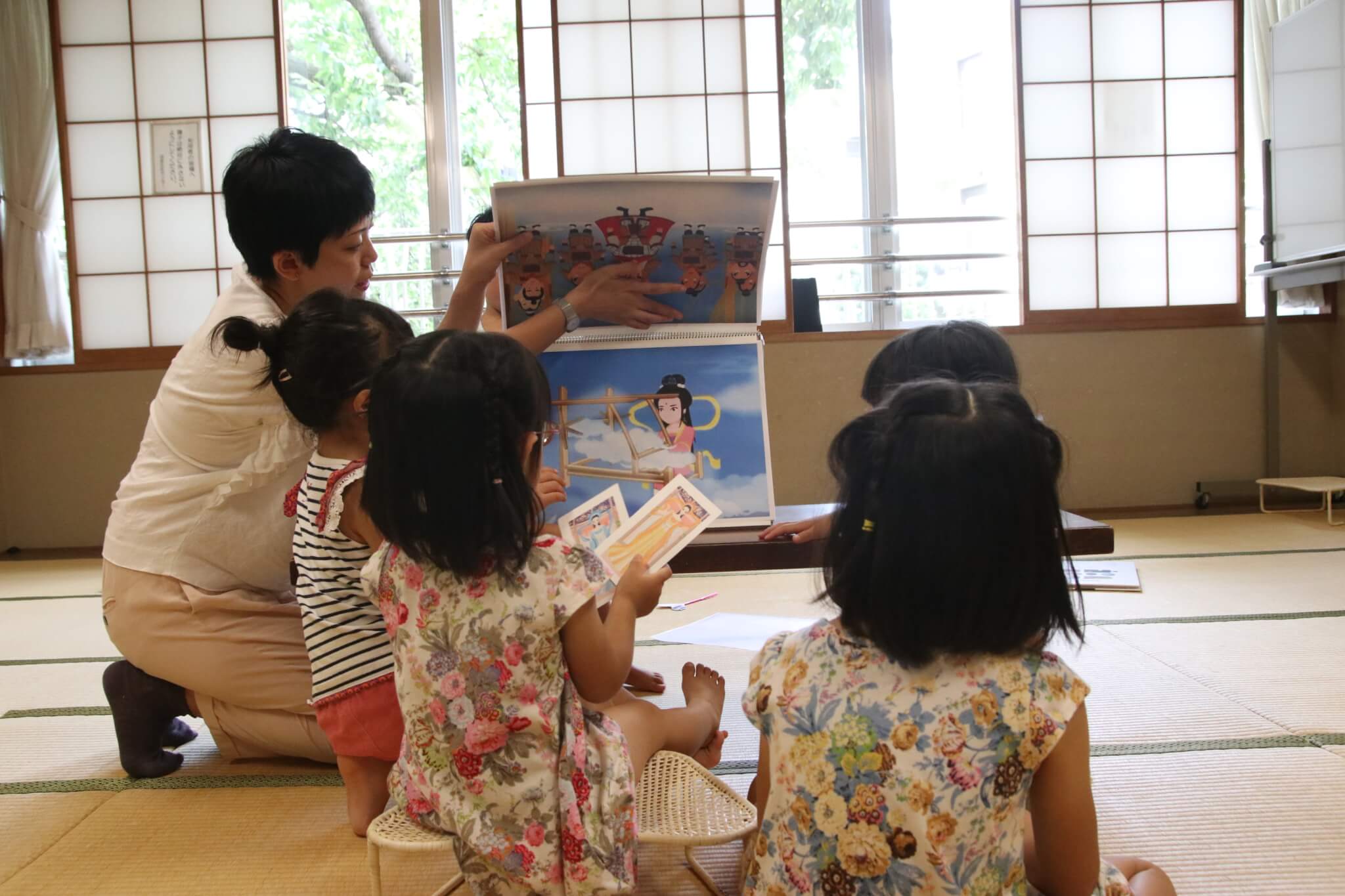
"The children can keep up just fine!"
After the event, we received some surprising feedback from the participants' parents.
"That's right. I actually struggled a lot at the beginning about whether I should provide a Japanese explanation after the Chinese. However, if the children are trying their best to engage with something they are not familiar with, and they realize that they will get an explanation in Japanese anyway, they will stop making an effort on their own. I'm committed to using only Chinese so that the children can fully utilize their communication skills."
The parents nodded in understanding to my thoughts. 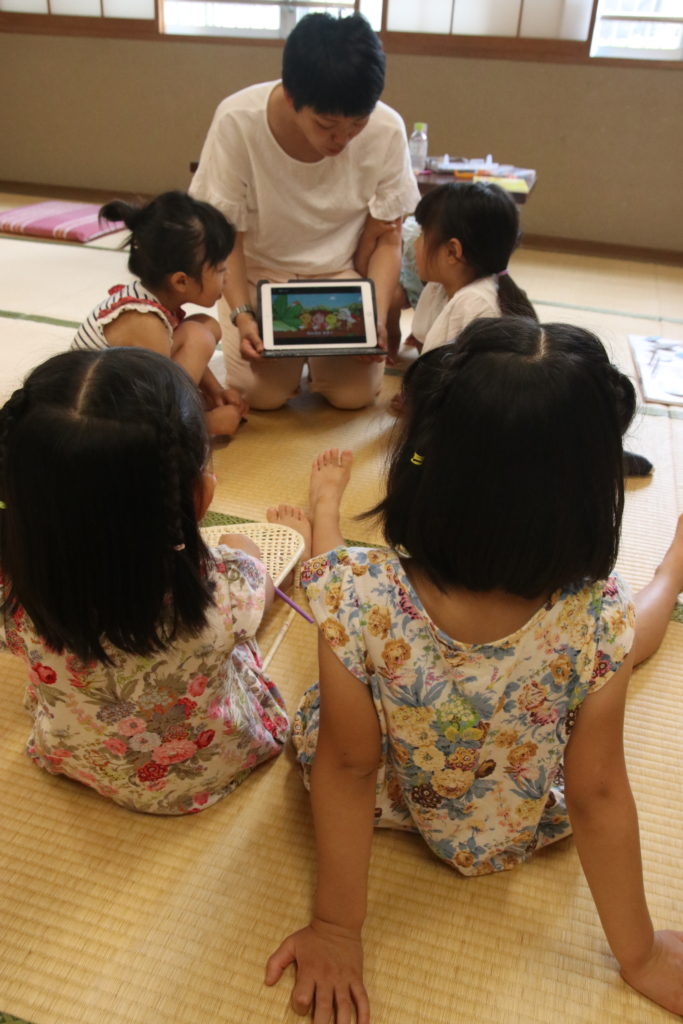
The friends who came for the first time this time are a bit shy sisters. When Yan Yan first spoke in Chinese, they had a look of surprise, but as they sang nursery rhymes with the other friends, their expressions gradually softened. By the time it turned into creative play, they seemed completely at ease.
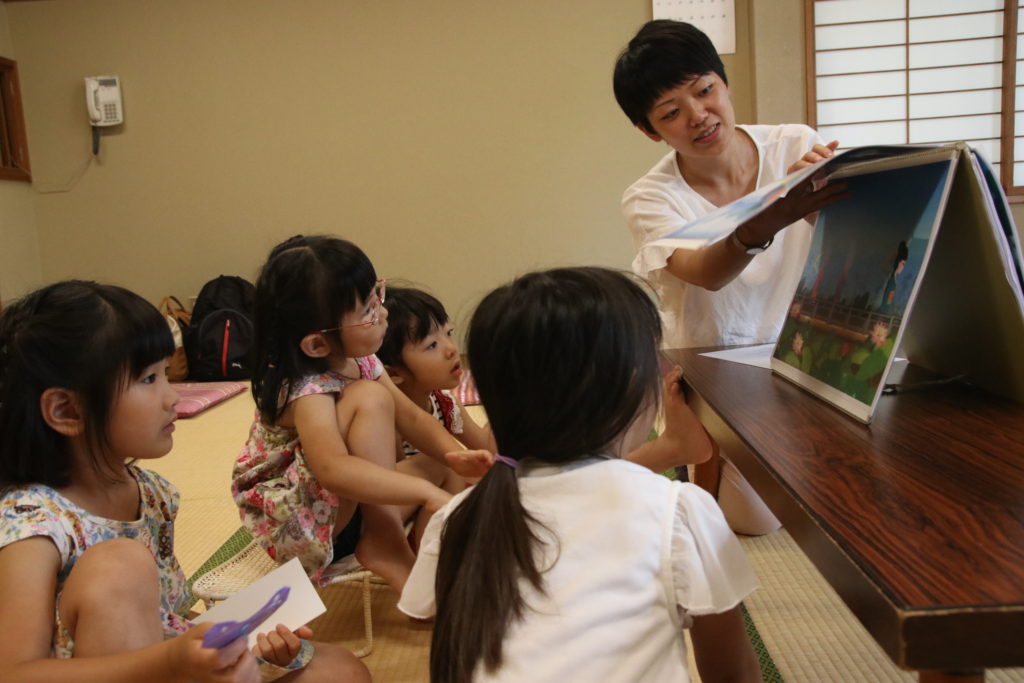
This time, for our Tanabata project, we created a paper play based on the Chinese version of the story of Orihime and Hikoboshi. We distributed a summary in Japanese for the parents. In Japan, the Tanabata story seems to convey the message that one should not be lazy, while in China, it tells the tale of true love that moved the hearts of the gods. (If you're interested, please see the notes at the end.)
In fact, it was quite a challenge to turn this grand love story into a picture story. To ensure that the children could understand the story just by looking at the pictures, I added more illustrations with short phrases for each image. As a result, it became a long picture story with a total of 40 images. However, when I actually performed it, I noticed that the fairy, Orihime, and Hikoboshi depicted in the illustrations wore completely different costumes and hairstyles than those in Japan, and I was captivated by the different developments of the story.
 We also played a card game where we guessed the colors of the seven fairies' outfits in Chinese, and we gave the children puzzles featuring the fairies' illustrations and Chinese paper cuttings as gifts. Everyone was captivated and overjoyed.
As we held the Shiyan Yan Club, I became able to recognize the changes in the children.
However, since Chinese is not as familiar to parents as English, it might be a bit challenging for them if everything is in Chinese (laughs). Moving forward, I hope to provide more context and intentions behind the program's content as much as possible.
Because we have a small group, we can take our time to play and engage with each child at their own pace. During this relaxed time, I hope the children will gradually develop an interest in China, and with that in mind, I have started planning our next activity.
★Chinese Tanabata★
Once upon a time, the Cowherd (Niu Lang) and the Weaver Girl (Zhi Nv) were friendly deities who originally lived in the heavens. However, they made a mistake and were punished.
The Weaver Girl (zhi nv) was given the task of weaving clouds, while the Cowherd was reborn as a human in a poor family. The Cowherd lived in poverty with a single cow, which was actually the god of cows who had been punished.
One day, the cow suddenly spoke to the cowherd and said, "Go to the nearby pond. The girl in the red dress there is your wife."
When the cowherd went to the pond as the cow instructed, he indeed found seven celestial maidens playing in the water. Upon seeing the weaver girl in a red dress, the cowherd fell in love at first sight. The weaver girl also quickly recognized him as the cowherd. She decided to stay in the human world and married him. The two were very close and lived happily together, and they had two children.
However, when the Queen Mother learned that the Weaver Girl had married a human without permission, she became furious and ordered the heavenly soldiers to bring the Weaver Girl back to the Celestial Palace. At that moment, the Cow passed away and gifted its skin to the Cowherd. To chase after the Weaver Girl, the Cowherd donned the Cow's skin, rode on a cloud, and went to the Celestial Palace with the children, but he could not cross the galaxy in front of the palace.
For many years, the Weaver Girl and the Cowherd stood on either side of the Milky Way, gazing at each other without ever wanting to part. Moved by their pure love, the Queen Mother allowed them to meet once a year on the night of July7th.
Then, every year onJuly7th, many magpies gather to form a bridge over the Milky Way, allowing the Cowherd and the Weaver Girl to reunite on the magpie bridge.