 日本語
日本語 English
 नेपाली
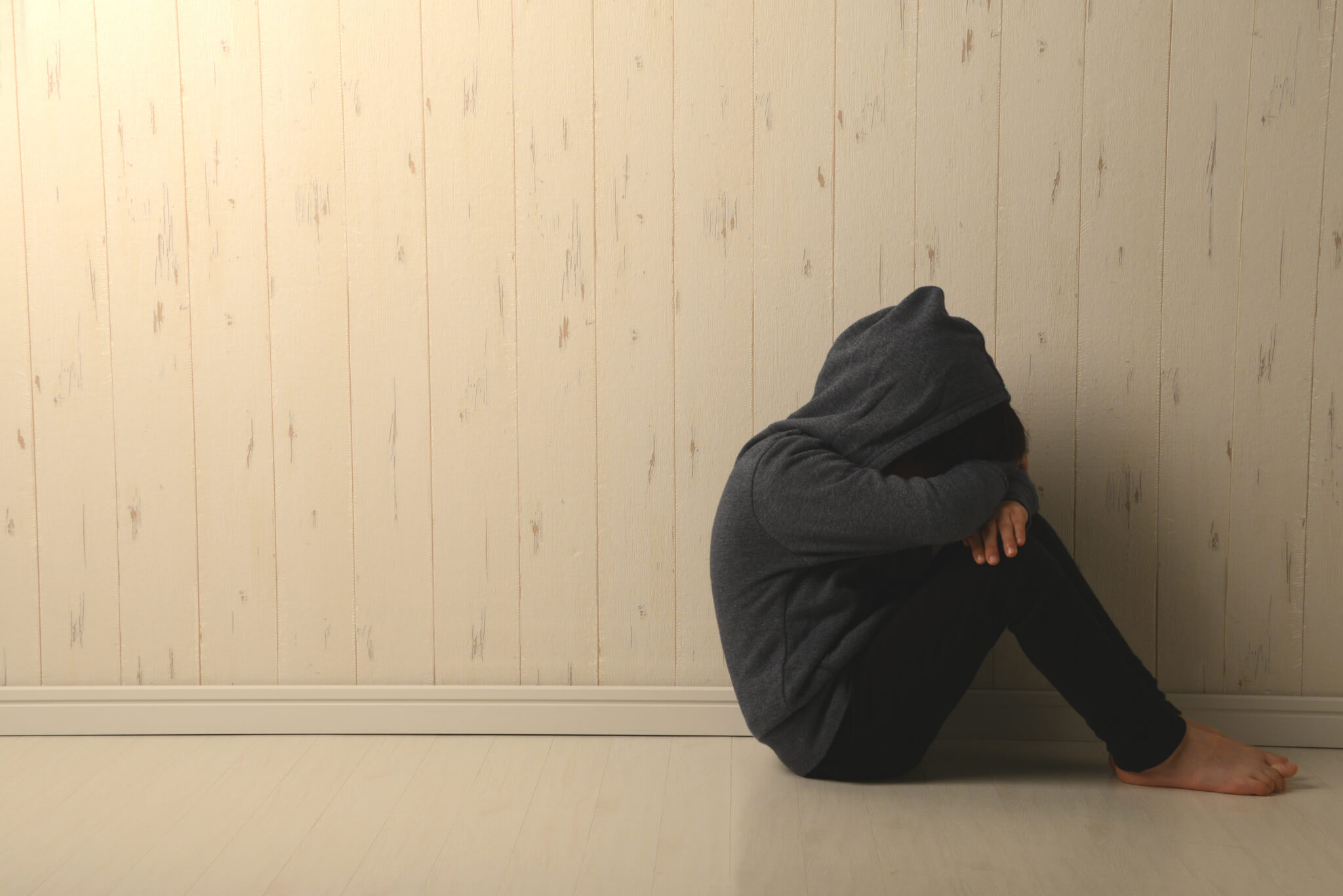
This article is an edited excerpt from the lecture and consultation session titled "When Children Hesitate to Go to School or Daycare: Parental Mindset and Responses," held in 2019.
This consultation meeting is a parenting support session where both Japanese and foreign participants come together to share their concerns and insights about parenting across cultures.
*Available in English and Chinese versions
Q. Says they don't want to go to school and experiences stomach pain and diarrhea (6th grade)
My sister spent three years in middle school without attending. She had been doing well all along, but once her absence from school ended when she entered high school, she suddenly started saying she didn't want to go to school and began experiencing frequent stomachaches and diarrhea.
At the current school, with the teacher's understanding, I am able to attend by only missing the subjects I struggle with. However, both the student and the parents are worried that the same situation might occur when entering middle school. Since the student tends to push themselves too hard, what symptoms should they express to be told, "It's okay not to go anymore"?
A.
When you say you have a stomachache or a headache, it means you are already pushing yourself beyond your limits.
So when you say you have a stomachache or a headache, it's your body telling you that you need to take it easy. What will you do?
It's about telling your child.
Parents are not the ones directly involved, so they don't know how to make a judgment. Only the children can make that judgment.
Children know how difficult things are and how much they are pushing themselves.
When I said I had a headache, they replied, "There are seeds of headaches, what do you think is the seed of your headache?"
When someone says their stomach hurts, you might think, "They are complaining about a stomachache, but I wonder if something else is bothering them."
There are times when it becomes difficult to eat food.
"Being able to eat means that there are worries around here, I wonder what that could be."
Please teach your child that this is how to listen to the body's voice.
When your body is feeling unwell, it's like saying, 'Your body is telling you it can't take it anymore, what will you do?'
If you say something like, 'I'm going to take a break today' or 'I think I'll give it a try today,'
If you say, 'Take care and don't push yourself too hard, and come back if it gets too difficult,' then...
Children will learn to make decisions by consulting with their own bodies.
By doing so,children who listen to their bodies early and can adjust their rest and activities tend to experience less emotional distress..
Adapting to a place that doesn't suit you requires a tremendous amount of mental energy,
Children who go to bed early can save their energy.
Take small breaks, and you can continue on while resting effectively. That's the key point.
It's very important to give children the lead in decision-making.
In this way,children who cannot take a break from school and force themselves to attend for a long time suffer deep wounds.
Once you take a break, it tends to extend for a long time.
If you don't heal the wounds in your heart, you can't move forward. As a result, those who have been carrying their burdens for a long time will take longer to recover.
Therefore,it's very important to feel comfortable taking a break from school.
Children who take a break often end up just playing games or reading manga.
Parents worry when you spend too much time watching the internet or TV.
Parents and schools often say that if you don't go to school, you won't have a future or be able to survive, which creates a lot of anxiety.
If I can't live, I don't understand the meaning of enduring this painful existence.
Most children consider suicide.
Nine out of ten children I met during consultations were considering ending their lives.
However,if parents change their perspective on school refusal and truancy to support their children, that can lead to their recovery.
While trying to reach that point, I will focus on the enjoyable aspects of reality to avoid sinking into a sea of despair and anxiety.
And to survive each day, we are drawn to games, the internet, and manga, which help us get through our daily lives.
One child was so worried about what would happen next in the Doraemon show they were watching on TV that they chose to stay alive instead of committing suicide, just to see the next episode.
He is currently creating games at a game development company.
In this way, the skills acquired during the time away from school often become valuable assets for the child's future career.
What to do when you're not at school? You can do anything, but creative activities really capture a child's imagination.
Listening to music, reading books, drawing, and enjoying art,
Creative activities like that are the quickest way to heal a wounded heart.
"If you're not going to school, then study at home," the parents urge.
Enjoy the creative and enriching experiences to the fullest during your time away from school.
After that, when one of the siblings refuses to go to school, usually the second or third one follows suit.
This is because, even if you take a break from school, you can learn from home that there are many paths available to you afterward.
It's very common for siblings to stop going together, and that's not a problem.
There is a declaration of the rights of children who do not attend school.
Children have the right to take a break from school.The government and parents have a duty to send children to school.
However, children have the right to learn at school, but they are not obligated to attend.
I hope to convey this clearly to children. It is a right that applies to all children, whether they are attending school or not.
Knowing this helps children feel much more secure.
I have the right to take a break from school.
I am currently exercising this right, and it is neither something to be ashamed of nor a sign of inferiority.
This declaration of rights guarantees you.
This is based on the United Nations Convention on the Rights of the Child.
The UN Convention on Human Rights is said to be the second highest form of rights in Japan, following the Constitution.
I hope you will definitely share this with the children.
……………………………………………………………………………………………………….
Advisor: Yoshiko Uchida (Child Psychology Counselor)
Since 1973, I have been providing consultation services at several public health centers in Tokyo. Since 1998, I have been running the "Children's Consultation Room: Momo's Room," where I hold group counseling sessions for issues such as school refusal, delinquency, and social withdrawal. I have also served as a part-time lecturer at Rikkyo University and as an advisor for NHK Radio's telephone consultation program, "Children's Heart Consultation." I have given numerous lectures at parenting circles across the country, as well as at meetings for parents considering school refusal and at kindergartens. My published works include 'Counselor Ryoko's Parenting Mysteries,' 'Q&A on Young Children's Lives and Hearts,' and 'Reluctance to Attend School.'
==== About the Organizer =============================================
JII is a nonprofit organization that supports foreign residents living in Japan, with a vision of "Cultural synergy."
We launched the first "Otonari-san Family Friend Program (abbreviated as OFP)" in Japan. (ENGLISH)
Japanese residents volunteer to partner with foreign residents living nearby in the same community,
This is an innovative system that provides direct interaction and personalized support through one-on-one meetings, online sessions, and chats over a six-month period. During the activities, OFP coordinators will assist to ensure smooth communication, and our team of experts will handle any complex inquiries from foreign residents.
Centered in Tokyo, over 260 Otonari-san (Japanese volunteers) and foreign residents from more than 33 countries and regions participate. This is not only a place for foreign residents to become familiar with life in Japan, its culture, the Japanese language, and local communities, but also a space where volunteers who wish to experience diverse cultures, broaden their horizons, and assist foreign residents in need can thrive.
Additionally, we offer support for foreign residents, including lifestyle consultations.
==================================================================